
Well Water Quality in Mathews County, VA: What Homeowners Need to Know About Water Filtration System Options in 2026
This is a subtitle for your new post
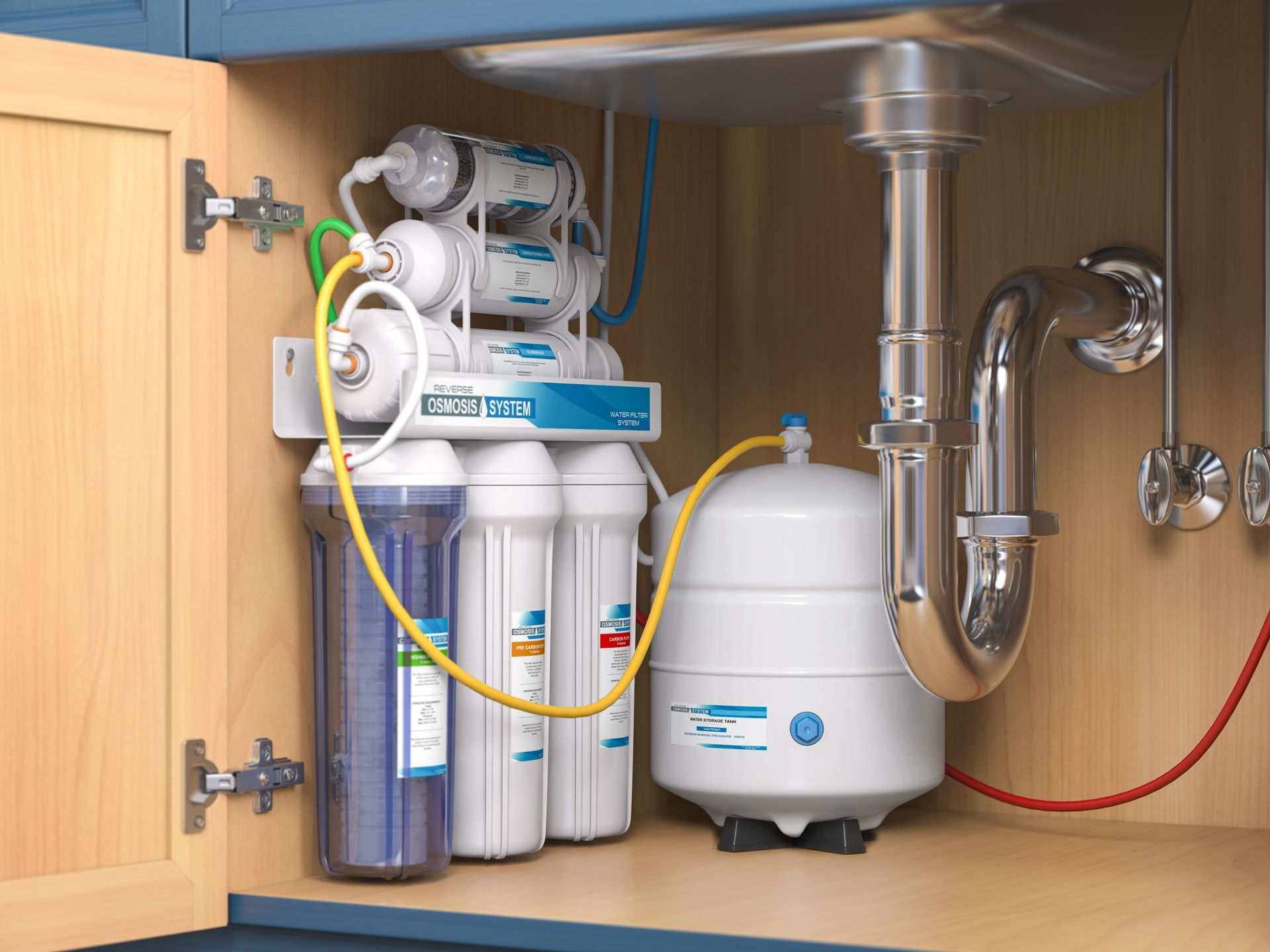
Well water quality in Mathews County, VA, is a topic every private well owner needs to understand. A properly sized Water Filtration System can be one of the most important investments you make for your home's long-term health and safety.
Failing septic systems, deteriorating underground storage tanks, and contaminated surface runoff are recognized threats to groundwater in Mathews County. If you rely on a private well (whether in Hudgins, Gwynn's Island, Susan, or near Mobjack Bay), this guide covers what contaminants may be present, how to interpret a test, and when a Water Filtration System is the right next step.
Why Mathews County Well Water Faces Unique Challenges
Mathews County sits on the Middle Peninsula, surrounded by tidal waterways on nearly every side. That geography matters for your well.
Research on the Chesapeake Bay Impact Crater indicates that the impact affected regional geology and hydrology more than originally thought, resulting in subsidence, faulting, and saline groundwater. For homeowners, this means some aquifer zones can carry elevated sodium or chloride levels, especially in shallower wells.
Saltwater intrusion is a threat throughout the Middle Peninsula, where coastal aquifers face pressure from sea level rise and development-driven pumping. Wells near tidal creeks, North River, East River, or the shores of Mobjack Bay may be more vulnerable over time. The Coastal Plain aquifer system is composed largely of unconsolidated sediments, and that sediment-rich geology also contributes to higher iron and manganese levels common throughout this region.
What Contaminants Are Most Common in Mathews County Well Water?
Private well water in Mathews County can carry several types of contaminants. Testing is the only way to know exactly what is in your water.
Iron and Manganese
Iron is among the most widespread nuisance contaminants in Middle Peninsula wells. You may notice rust-colored stains on sinks, laundry, or fixtures, and iron can clog pipes and reduce appliance life over time. A dedicated Water Filtration System for iron removal can address these issues at the point of entry.
Hydrogen Sulfide (Sulfur)
A rotten-egg smell is a strong sign of hydrogen sulfide. The bacteria that produce it thrive in low-oxygen environments like wells and water heaters. Hydrogen sulfide can also indicate sewage contamination, particularly in shallow wells located near leaky septic drainfields, a real concern given the density of older systems in rural Mathews County.
Hardness
Hard water causes scale buildup and reduces appliance longevity. It often requires a water softener alongside a Water Filtration System for complete treatment.
Coliform Bacteria
Virginia's Private Well Regulations (12VAC5-630) require coliform testing of newly constructed wells. After installation, all subsequent testing is at the homeowner's discretion. Coliform bacteria can enter wells through surface runoff, a damaged well cap, or nearby septic problems, and cannot be detected by taste, smell, or appearance alone.
Sediment and Turbidity
Sandy aquifer materials in coastal Virginia allow fine particles to enter your water supply. A sediment pre-filter is often installed as the first stage of a whole-home Water Filtration System to protect downstream equipment.
How Often Should You Test Your Mathews County Well?
The National Ground Water Association recommends annual testing for bacteria, nitrates, and any contaminants of local concern. Test more frequently if water taste, odor, or appearance changes, or if a nearby contamination source appears.
A baseline comprehensive test covering bacteria, iron, manganese, hardness, nitrates, pH, and sulfur gives you the clearest starting point for any treatment decisions.
Filtration vs. Softening: Which Do You Need?
These are two different tools, and many Mathews County homes need both. A water softener targets hardness minerals through ion exchange. A Water Filtration System may target iron, sulfur, sediment, bacteria, or chemicals depending on the media used. Many homes benefit from a combination: sediment filter, iron filter, carbon filter, UV disinfection, and/or reverse osmosis.
The right combination depends on what is in your water, which varies by well. Since private well water is not federally regulated, testing and treatment are entirely the homeowner's responsibility. Starting with a professional water test removes the guesswork and can save you significant time and money.
What Does a Local Service Visit Look Like?
A service call typically begins with an on-site evaluation of your well type, pressure tank, and visible water quality indicators. For health-related contaminants, samples go to a certified laboratory. Once results are back, treatment is matched to your specific findings and equipment is sized for your household's water usage.
Schedule Your Mathews County Water Test Today
Protecting your family's drinking water starts with knowing what is in it. A Water Filtration System is only as effective as the test results it was designed around.
Kline Well & Septic Co serves homeowners throughout Mathews County and the surrounding Middle Peninsula. Call 757-945-2905 to schedule a water test or request a service visit, or contact us online. You can also learn more about our well and water services serving the Middle Peninsula. Find us and read local reviews on Kline Well & Septic Co.